
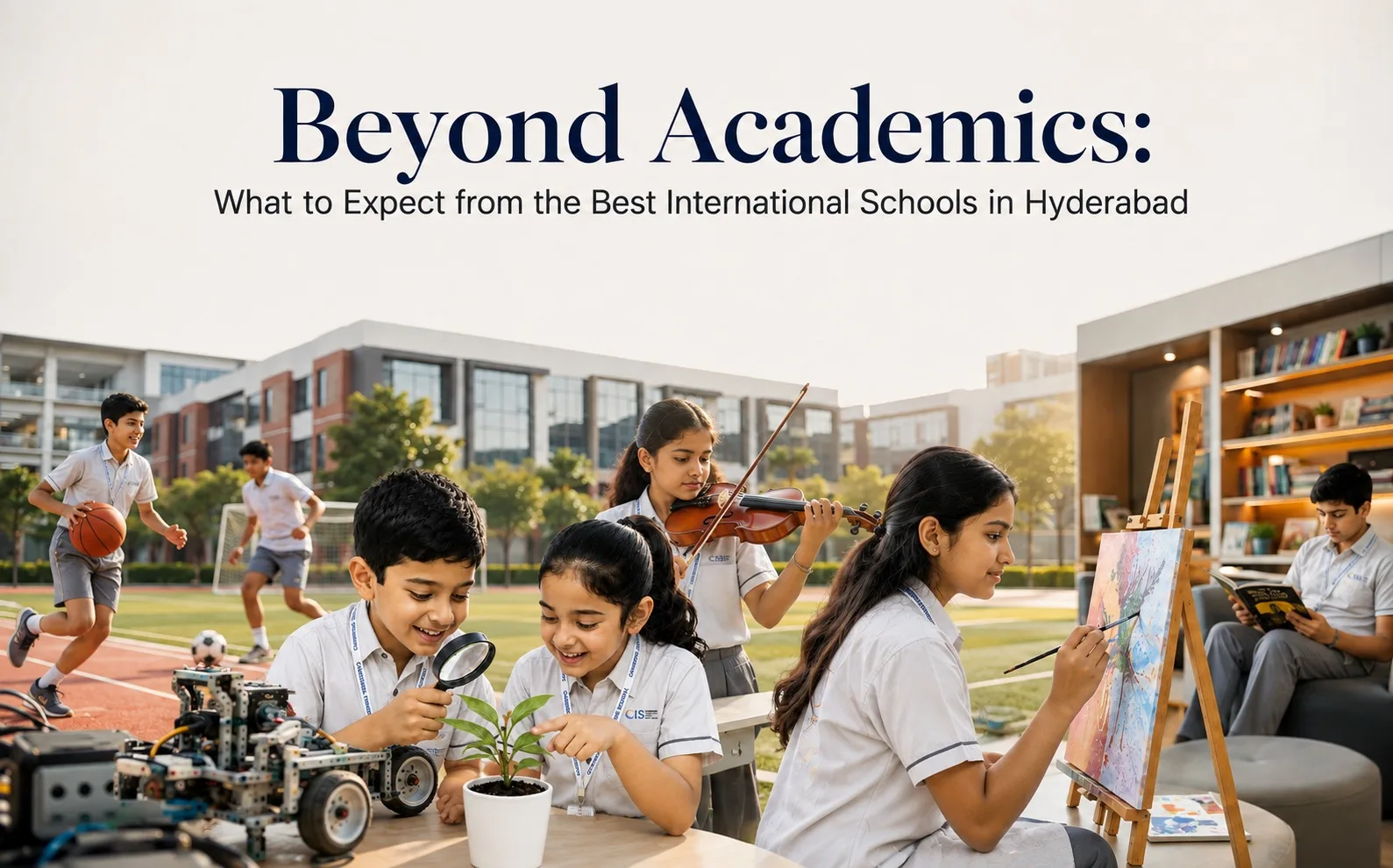
If someone wants to know about a school, the first things coming to their mind are generally queries related to education, like what is offered in the school, is it successful for the students, etc.
In fact, these questions only touch the surface of actual information.
Students spend school years learning how to relate with other people, how to create friendships and how to handle issues, as well as finding activities and hobbies to enjoy.
When it comes to parents searching for the best international schools in Hyderabad, they understand that these simple facts can be as important as subjects learned in the classroom.
A Good School Should Make Children Curious
Consider the case of a child who has just returned home after attending a science class and says: “Mom, do you know plants need light to prosper?”
That curiosity is essential.
It signals that the child has moved beyond rote learning to the application of concepts in the real world.
When children learn something, they become open to new questions.
By conducting a discussion, experiment, or project, familiar ideas can suddenly become stimulating topics.
The goal is not to make the lesson ‘difficult,’ as sometimes a simple question can cause the most interesting conversation.
Learning How to Speak With Confidence
Public speaking doesn’t come naturally to all students. Some have loads of ideas but struggle with performance anxiety when they are in the spotlight.
Several activities can bring about changes in this regard.
The teacher, for instance, may ask the class to discuss their favourite book. While one child may be able to elaborate on their story easily, another may manage only a couple of phrases when asked.
With encouragement and practice, eventually the second child will be able to present to a class without hesitation.
Such improvements are surely important as communication is vital for students in their educational and professional careers.
Teamwork Starts With Small Things
When asked to create something as a group, a variety of personalities are revealed. Each personality has its own unique characteristic. For example, one child might be eager to take charge, while another may have come up with numerous good ideas, and yet another child may perform all the detailed work in silence. Collaboration teaches children the importance of listening to others and how collaboration actually works regardless of their desire to be leaders. These experiences enable children to develop traits such as patience, teamwork, responsibility, and respect for others' contributions.
This trait is especially appreciated by parents when looking for the best international schools in Hyderabad.
What Happens When There Isn't One Right Answer?
Kids are usually exposed to queries that have one definite answer. However, real life does not work this way. Picture a classroom exercise where students are asked to construct a shelter with a limited number of materials. There could be multiple answers.
One group may come up with the shelter that would be strong enough, while another group might devise something a lot more spacious. Yet another group might develop a totally new design.
Instead of only asking, “What is the right answer?” students will be able to share the reasons behind their decisions.
Such activities help children experiment, reason and understand that making mistakes is not equivalent to failing.
Creativity Is More Than Drawing and Painting
Creativity can be encountered in various forms.
For example, a student who is writing an alternate ending for a story using creativity. Children also exhibit creativity when they invent new methods for solving a math problem. Another instance where creativity comes into play is through the creative design of a presentation.
When students are provided with choices and options, they can use these decisions to create unique solutions instead of only reproducing someone else's answers and ideas.
At Candiidus International School, opportunities for creativity can be offered, as they become part of the everyday schooling process and they aid students in realizing that there can be not only one solution for a particular problem.
Helping Children Become Independent
The development of independence is a gradual process. Initially, it could mean that a student starts remembering to carry the necessary things for completing his or her project. Then it could involve such things as thinking about how to do an assignment and making decisions about how to conduct research.
At this stage, it is still possible for the teacher to assist but students can start feeling responsible for their work.
For instance, in case the student was unable to bring something for project implementation the teacher should not solve the problem for the student because it would not be a very efficient way of teaching. It would be much better to help the student to analyze what went wrong and find ways to avoid such mistakes in the future.
The student may learn to become more responsible in making own decisions.
Learning About a World Beyond Their Own
Naturally, children learn about the world through the things and people they see around them. School helps them learn more about how people in different parts of the world behave, speak, celebrate, and experience life.
For example, a discussion on holidays can introduce students to how different groups of people celebrate their traditions.
At the same time, a geography project might prompt students to learn about a new country and its people, surroundings, cuisine, culture, etc.
All these experiences prepare children to be curious rather than judgmental.
Technology Should Support Learning, Not Replace It
Kids are growing up in a world where technology is everywhere. They need to know how to not only use technology but also how to apply it responsibly.
For instance, kids can learn how to compare data from different sites on the internet when working on a research project about animals.
Through this activity, students will learn that technology is a source of information, but they still have to put some thought into the information they get.
There Is More to School Than the Classroom
Some children discover their strengths outside regular academic lessons.
A student who is quiet during classroom discussions might become confident on a sports field. Another child may discover a passion for music, theatre, art, coding, or public speaking.
Sports can teach teamwork and discipline. Performing arts can build confidence. Creative activities can encourage self-expression.
These experiences give children opportunities to discover what they enjoy and where their strengths lie.
A Supportive Environment Matters
Children learn differently. One student may quickly understand a new concept, while another may need more time and practice.
A supportive school environment gives children room to learn at their own pace while encouraging them to keep trying.
At Candiidus International School, the emphasis is not simply on completing the syllabus. The larger goal is to create an environment where students can learn, participate, experiment, and gradually become more confident in their abilities.
The Candiidus Difference
When it comes to choosing a school for children, it is about finding an appropriate place for the child to grow as a person.
The best international schools in Hyderabad should offer more than outstanding academic results or facilities; they should be able to provide children with opportunities to interact with each other, work in groups, and develop critical thinking skills while exploring their interests and learning about the world.
Candiidus International School aims to combine the process of academic learning with activities which have the aim of developing curiosity, creativity, self-confidence, collaboration, and accountability.
Years later, children may not remember every worksheet they have solved, but they will definitely remember the work with their peers they accomplished successfully, the mistakes they made and learned from.
FAQs
1. What should parents look for beyond academics when choosing an international school?
Parents can consider communication opportunities, extracurricular activities, student well-being, teaching methods, collaboration, creativity, technology use, safety, and opportunities for independent learning.
2. How can school activities build confidence?
Activities such as presentations, group projects, sports, performances, and classroom discussions give children regular opportunities to express themselves and take on new challenges.
3. Why is learning through real-life examples important?
Real-life examples help children understand how classroom concepts connect with situations they may encounter outside school, making learning more meaningful and easier to remember.
4. How does Candiidus International School support holistic development?
Candiidus combines academic learning with opportunities for creativity, communication, collaboration, technology-based learning, extracurricular activities, and personal development.
5. Why should parents look beyond examination results?
Examination results show academic performance, but qualities such as confidence, communication, creativity, independence, teamwork, and problem-solving also contribute to a child's long-term development.
Keep reading
Related articles

Best International Schools in Hyderabad with Cambridge and CBSE Excellence
Discover why Candiidus stands among top Cambridge Schools in Hyderabad, offering global learning, academic excellence, and future-ready education.
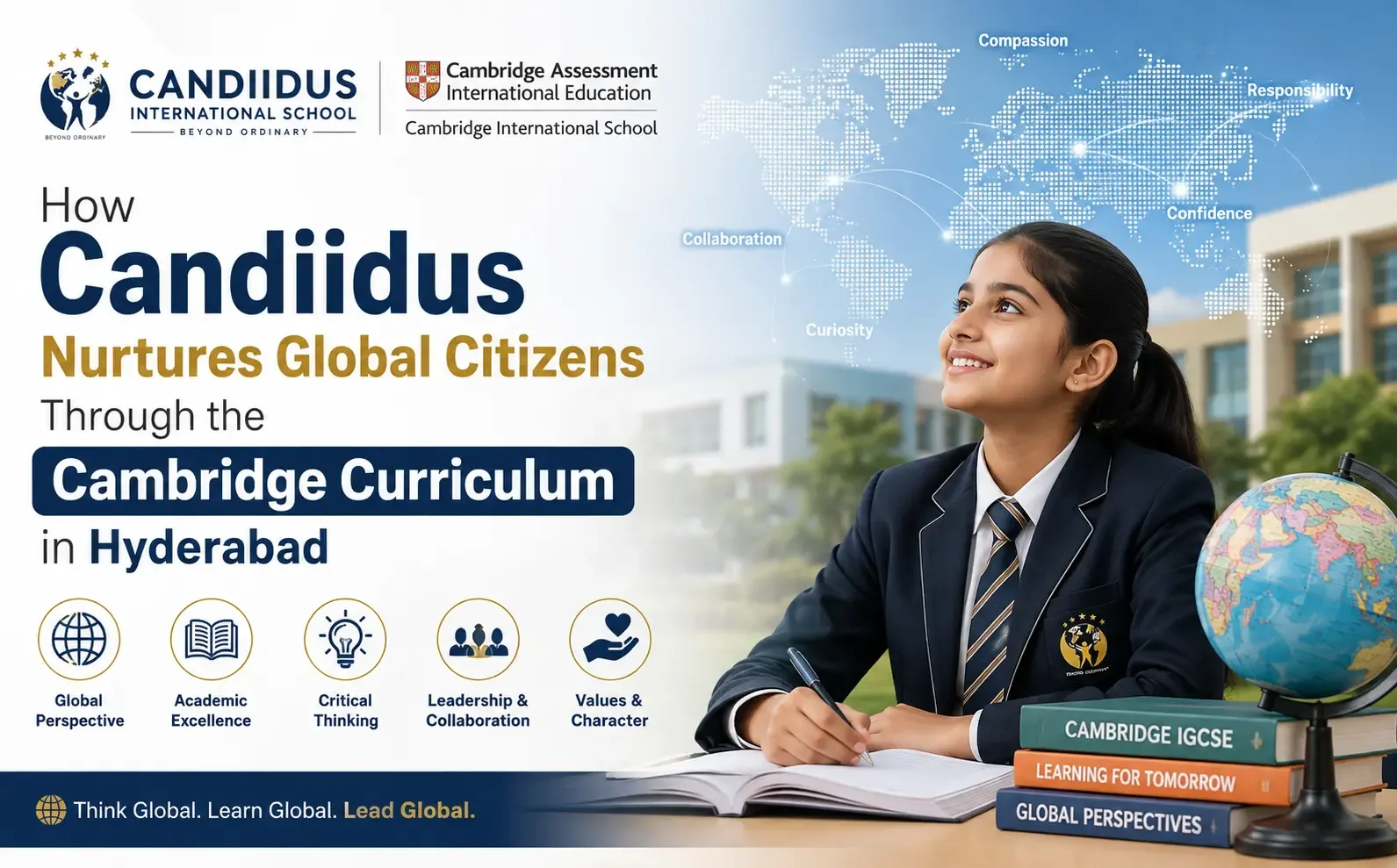
How Candiidus Nurtures Global Citizens Through the Cambridge Curriculum in Hyderabad
Discover how Candiidus International School nurtures global citizens through the Cambridge curriculum among leading Cambridge Schools in Hyderabad.
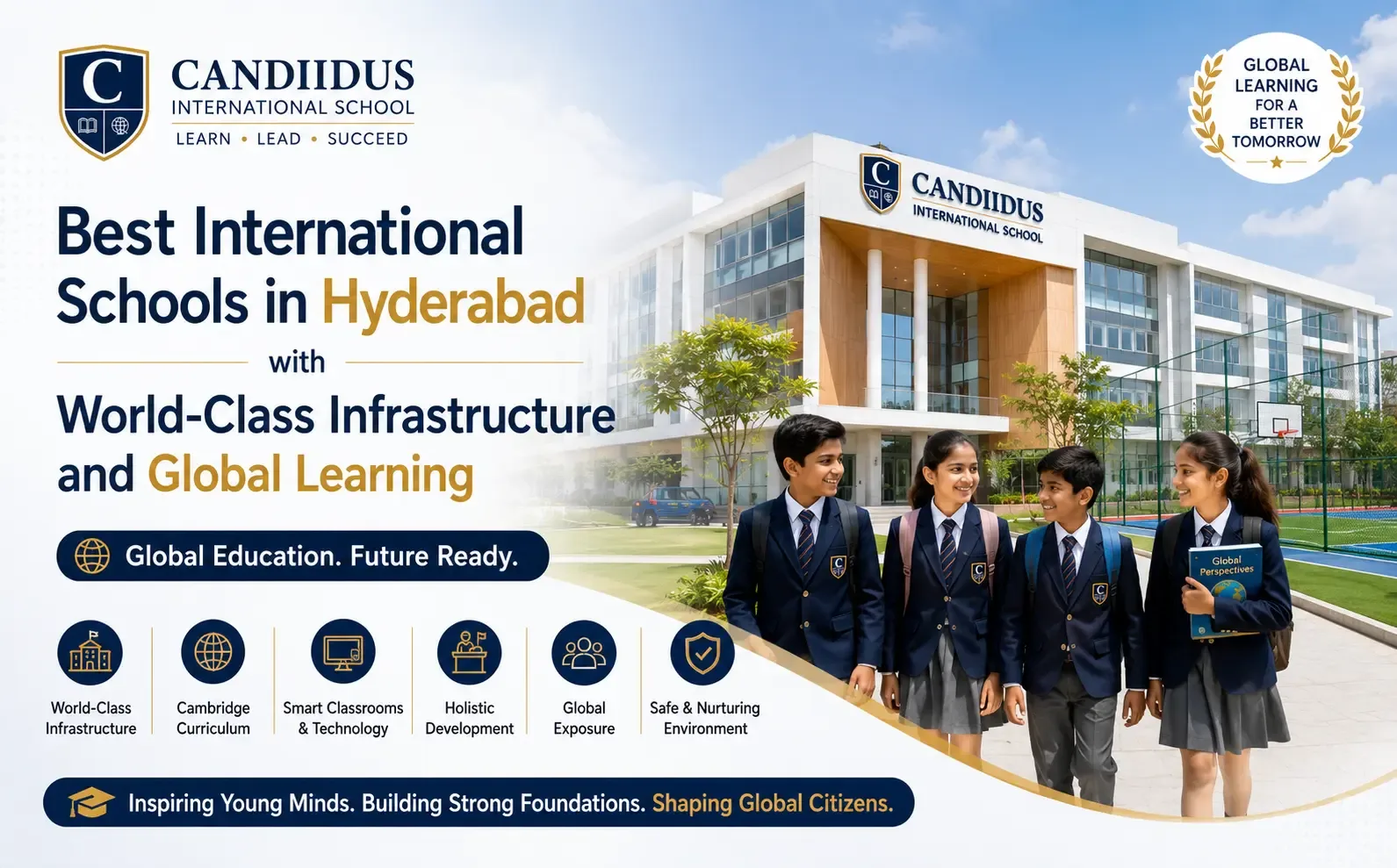
Best International Schools in Hyderabad with World-Class Infrastructure and Global Learning
Explore why Candiidus ranks among the best international schools in Hyderabad with world-class infrastructure, global learning, and future-ready education.
Discussion
Comments
No comments yet. Be the first to share your thoughts.
Leave a comment
Comments are reviewed before they appear on this page.