
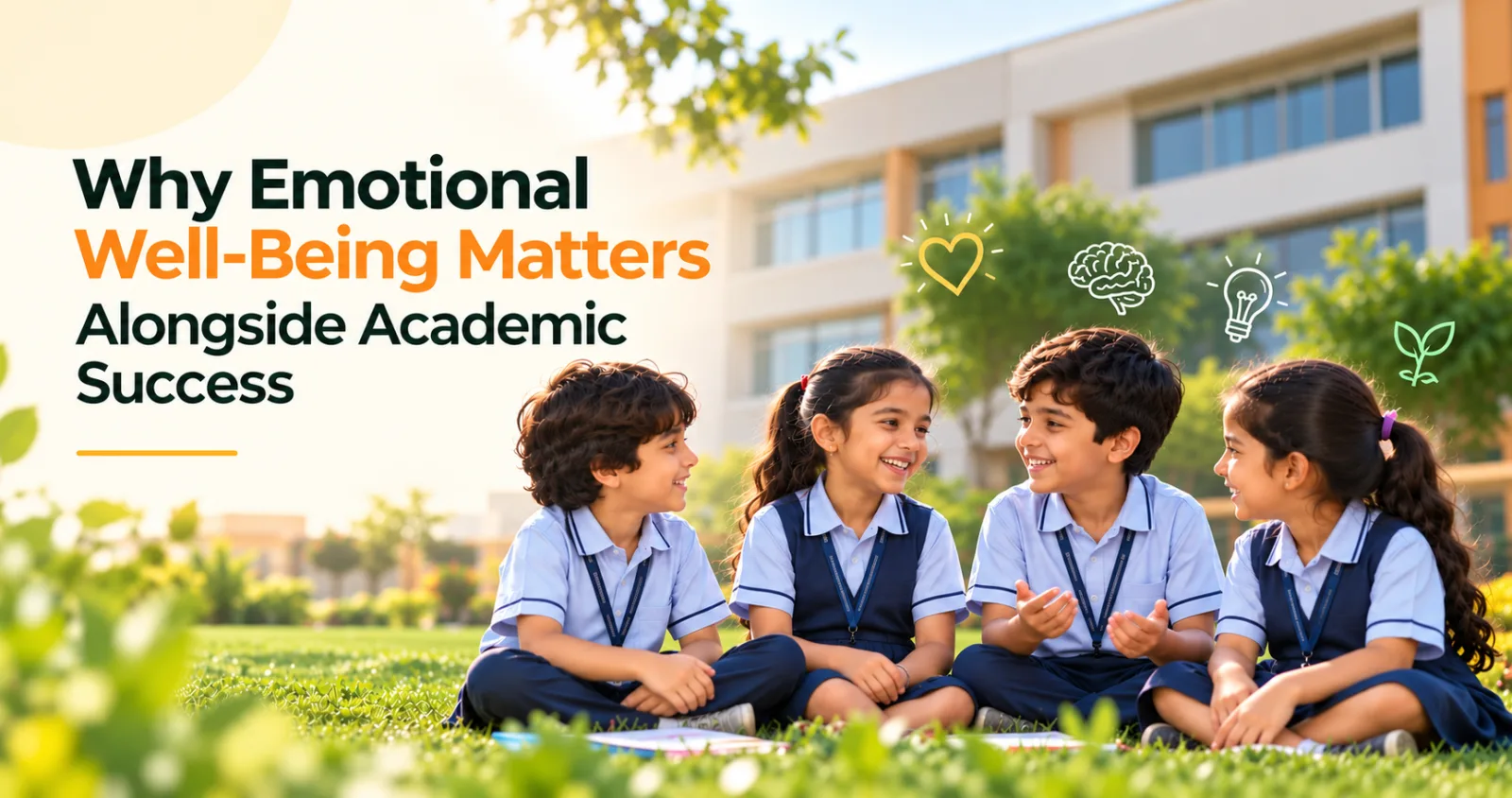
While the reports of a student might look wonderful from the outside, they may be gripped by anxiety before a test and constantly be worried about making mistakes or find it difficult to speak out about issues.
A child's academic performance does not always mirror the way he or she is feeling. A student should have the opportunity to learn, but he or she also needs to feel safe, understood, included, and confident enough to take on challenges. When academic and emotional well-being emerge with time-and in context-boots each child's educational and everyday experience together.
This is a significant factor, one that has to weigh in the minds of parents comparing the best international schools in Hyderabad, because school is much more than marks, exams, and classroom achievements.
When Good Grades Do Not Tell the Whole Story
The way children express anxiety may differ from adults. One child may express anxiety clearly while another may appear unusually reserved, difficult to deal with, or unwilling to come to school.
Parents can notice several signs including:
-
Getting upset about small mishaps or disappointing results
-
Shunning some of their favourite activities
-
Worrying too much about tests or assignments
-
Having trouble making friends or working in groups
-
Not being able to ask the teacher when confused
These signs are not automatically indicative of the existence of a noticeable problem. Children can simply have bad days, similar to adults; however, should these changes persist or start having an impact on everyday life, the situation should be dealt with accordingly, rather than regarded as laziness.
The Hidden Pressure Behind Academic Performance
Think of a student who has mastered a math lesson yet refrains from responding to questions due to the anxiety of being wrong. At the same time, someone else may spend hours perfecting their homework, for it is unacceptable to them that the response is not perfect.
In the first case, as well as in the second one, excessive pressure to succeed can hinder the learning process.
The more children focus on making mistakes, the more likely it is that they will flee from challenges, conceal their difficulties, or compare themselves with others. As a result, they will start viewing grades as the proof of their worth instead of considering them to be the feedback about their progress.
A better approach might be to help students realize that mistakes are an integral part of learning. A bad grade may help you find the weak aspects of your work, and the effort, persistence, and desire to ask questions should be appreciated as well.
It is important to have high expectations; however, it is much better if children learn to be confident.
What Schools Can Do Beyond Teaching the Syllabus
A supportive school environment does not mean removing challenges or expecting students to feel happy all the time. It means helping them develop the skills to manage everyday difficulties and seek support when needed.
1. Make it comfortable to ask for help
Students should feel able to tell a teacher when they do not understand a topic, feel overwhelmed by an assignment, or need clarification. Approachable teachers can help children address problems before they become bigger concerns.
2. Create a culture that values progress
Recognising improvement, persistence, curiosity, and responsible effort helps students see learning as a process. A child who improves gradually should feel that their progress matters, even if they are not at the top of the class.
3. Encourage friendships and respectful behaviour
Group activities, shared projects, and guided conversations can help children practise cooperation, empathy, and conflict resolution. Schools should also take bullying and repeated exclusion seriously.
4. Allow time for interests beyond academics
Sports, music, art, reading, and other interests give students different ways to express themselves and experience achievement. These activities can provide a valuable balance to academic responsibilities.
5. Listen before jumping to conclusions
When a student behaves differently or misses a deadline, understanding the circumstances is often more helpful than immediately assuming they are careless. A conversation may reveal confusion, social difficulties, excessive workload, or another issue that needs attention.
Parents exploring the best international schools in Hyderabad can ask how schools communicate with families when a child appears to be struggling and what support systems are available.
Small Changes at Home Can Make a Difference
Emotional wellness is not exclusively the domain of schools. The interactions that children have at home every day play a role in understanding what success and failure mean and how they perceive their own abilities.
Instead of asking questions like “How well did you do today?” parents can phrase their questions differently, such as “What interesting things did you learn today?” and “What was challenging today?”
Such questions create a better environment for honest communications with children about their experiences and not only focusing on the outcome of these experiences.
Parents may maintain genuine expectations and accept the need for the child to have their rest time, avoid making comparisons with other siblings, and remain calm while listening to children.
When distress continues, affects daily functioning, or becomes difficult to manage, families can consider seeking guidance from an appropriately qualified mental health professional.
Finding the Right Balance at Candiidus International School
In order for education to be meaningful, it should give the children an opportunity to learn by gaining knowledge and confidence while establishing relationships and developing coping skills. Although we consider different aspects of development as complementary, it should be noted that emotional well-being is not a substitute for academic efforts and vice versa. While choosing among the best international schools in Hyderabad, parents can investigate various questions beyond academic success, such as are teachers accessible enough; are students free to take part in classes without fear of humiliation; what methods are employed to resolve conflicts among students; do children have a chance to get support when needed.
At Candiidus International School, parents may learn in what way the school proves itself efficient in the sphere of learning environment and may find out about the available student support activities. Every child is going to face problems, arguments, doubts from time to time. What is really important is whether any adults can provide any necessary assistance to children in case of need.
FAQs
1. Why is emotional well-being important for students?
Emotional well-being helps students manage everyday challenges, develop relationships, seek help when needed, and engage more confidently in learning.
2. Can emotional stress affect academic performance?
Yes. Persistent stress can affect concentration, motivation, sleep, memory, and a student's ability to participate in classroom activities.
3. How can parents support their child's emotional well-being?
Parents can listen without judgment, maintain realistic expectations, encourage healthy routines, and make time for conversations beyond marks and examinations.
4. What should parents look for in a school's approach to student well-being?
Look for approachable teachers, clear anti-bullying procedures, respectful classroom practices, communication with families, and access to appropriate support.
5. How can schools balance academic success and emotional well-being?
Schools can maintain meaningful academic expectations while encouraging healthy responses to mistakes, positive peer relationships, student participation, and appropriate support when difficulties arise.
Keep reading
Related articles
How Project-Based Learning Turns Students Into Problem Solvers
Discover how project-based learning helps students develop problem-solving, research, teamwork, creativity, and communication skills at Candiidus International School.

Best International Schools in Hyderabad with Cambridge and CBSE Excellence
Discover why Candiidus stands among top Cambridge Schools in Hyderabad, offering global learning, academic excellence, and future-ready education.

Why Candiidus Is Among the Leading International Schools in Hyderabad India
Discover why Candiidus is among the leading international schools in Hyderabad India, offering global education, holistic learning, and future-ready skills.
Discussion
Comments
No comments yet. Be the first to share your thoughts.
Leave a comment
Comments are reviewed before they appear on this page.