
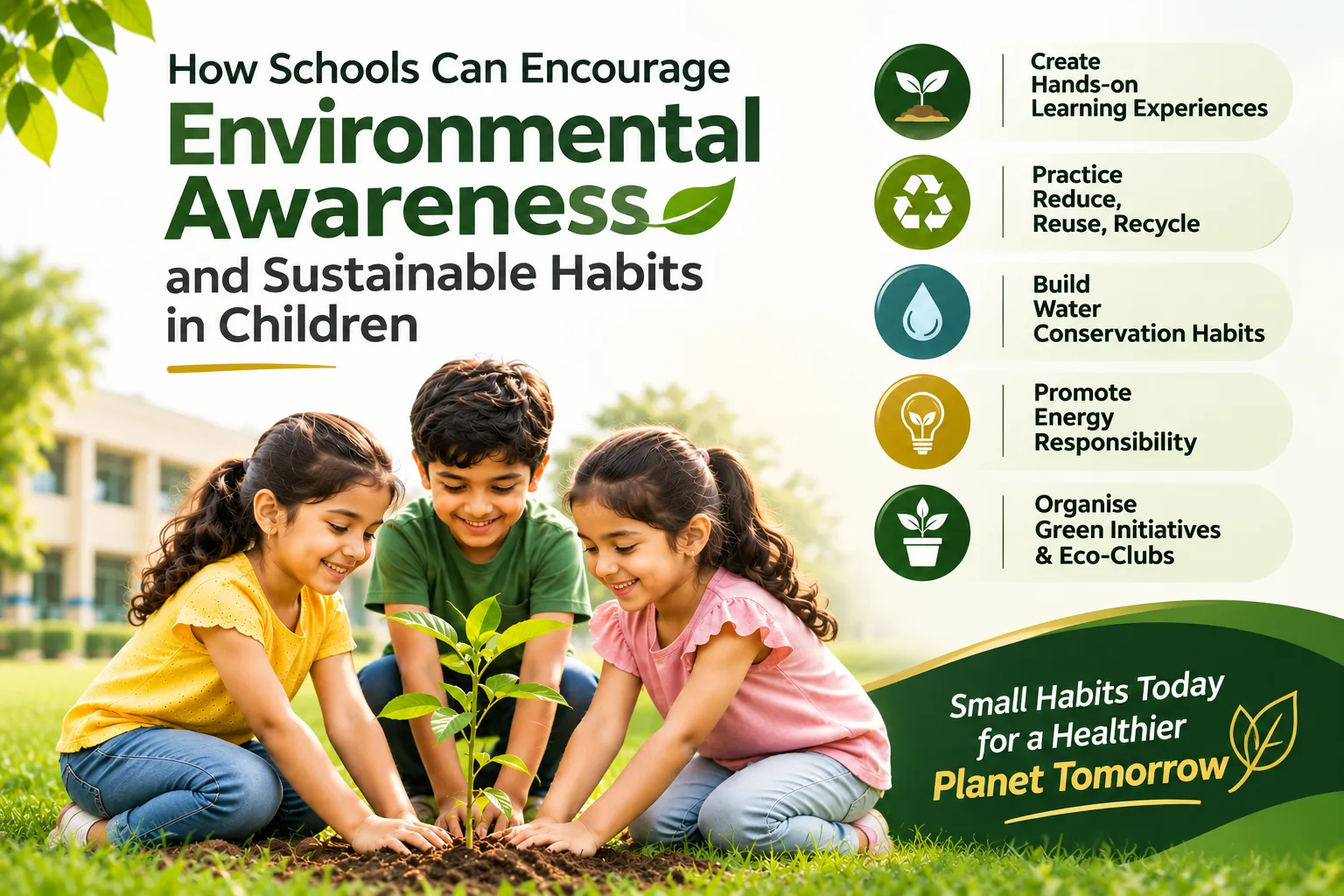
Awareness in nature is a crucial aspect of a child's development. Kids need to learn how nature works and how their actions can impact the environment. Simple habits like saving water, minimizing waste, planting trees, or not littering can make a significant contribution to being a responsible person.
Schools are essential for teaching children these habits because they spend a lot of time at school studying and participating in various activities. With the use of classroom teaching and practical lessons, Cambridge schools in Hyderabad can help children get acquainted with the idea of caring for the environment.
Introduce Environmental Education Through Classroom Learning
Educational establishments must adopt an eco-friendly approach to teaching kids of different age groups with respect to environmental issues. Educators must use easy-to-understand examples when discussing important concepts such as pollution, biodiversity, and climate change.
Several subjects can incorporate environmental themes, including geography, issues of science, and social studies. As an illustration, students may come to know why saving natural resources is vital for the environment, and how plastic pollutes the surroundings.
Once students acquire the necessary knowledge about the environment, they will realize that caring about nature is not just an educational subject but their responsibility in daily life.
Encourage Waste Segregation and Recycling
Teaching children how to dispose of waste responsibly is one of the easiest ways to introduce sustainable habits. Schools can install separate bins for recycling, biodegradable, and general waste in the classrooms and communal areas.
Teachers can show how paper, plastic, food, etc. can be separated. Students might get engaged in creative recycling projects, such as making useful oddments from reused materials.
These projects teach students not only to understand the necessity of reducing waste but also awaken their creativity and awareness of consumption issues.
Develop a Habit of Saving Water and Electricity
It is important for kids to learn how to value natural resources in order not to waste them. In schools, children can be taught simple rules, including how to close the tap when not in use, turn off lights and fans when exiting the classroom, and to use water wisely.
Instructors may hold a weekly competition in the classroom to find methods of reducing water and electricity consumption. Besides, students can come up with reminder posters and see who checked whether the lights and the taps were off.
If kids accomplish these practices frequently, they will apply them at home, and sustainable development will become the responsibility of everyone.
Create School Gardens and Planting Activities
Gardening offers children a chance to connect with nature by experiencing it firsthand. Schools could make small gardens for children to grow flowers, vegetables, and different native plants. In such gardens,c children can be involved in watering the plants, preparing soil, observing the growth, and learning how sun and water help plants grow. Such activities serve to introduce some basics of biodiversity and plant life to children.
Schools could also arrange activities for planting trees and make children responsible for looking after their gifts to nature. Such activities make nature education more interesting and unforgettable for children.
Organise Eco-Clubs and Environmental Campaigns
Eco-clubs empower learners to get involved in preserving the environment. They are student-led groups started by educational institutions to coordinate activities such as clean-up campaigns, recycling initiatives, poster contests, and environmental awareness activities.
These students may work collaboratively to discover environmental problems at their school and propose solutions. For instance, they could advocate for the reduction of single-use plastics, management of green areas, or improvement of waste segregation.
UNESCO emphasizes the necessity to engage students, teachers, and parents in sustainability endeavors through a comprehensive approach.
Connect Environmental Learning with Everyday Life
Environmental education becomes more meaningful when children understand how it applies outside the classroom. Teachers can encourage students to carry reusable water bottles, avoid unnecessary packaging, use both sides of paper and keep public spaces clean.
Schools can also discuss responsible transportation, food waste and the benefits of choosing reusable products. Students can observe their surroundings, identify environmental concerns and suggest small changes they can make.
For families exploring the best international schools in Hyderabad, opportunities for practical learning, environmental projects and student participation can be useful factors to consider.
Involve Parents and the Community
The cooperative efforts with parents will lead to greater environmental awareness among children. Schools can provide parents with the opportunity to participate in initiatives that promote tree planting and proper waste disposal.
Involving kids in environmental initiatives at home can include, for example, stopping the water from running unnecessarily, separating rubbish and taking care of plants. Parents should therefore support these initiatives and adopt similar habits and notions in their own lives.
Taking part in environmentally-friendly projects during school will help children realise that caring for the environment is not just the responsibility of schools and can be also associated with adults outside of school.
Make Sustainability Part of the School Culture
Sustainable habits develop through regular practice. Schools can introduce green classroom guidelines, conduct periodic waste and energy checks, and recognise students who consistently demonstrate responsible behaviour.
Environmental themes can also be included in assemblies, celebrations, competitions and annual school activities. Instead of limiting environmental awareness to special occasions such as World Environment Day, schools should make it part of everyday learning.
For international schools in Hyderabad India, encouraging sustainability through classroom practices, campus activities and community participation can help students develop a practical understanding of environmental responsibility.
Conclusion
Environmental awareness is not developed through lessons alone. Children need opportunities to observe, participate and practise sustainable habits in their everyday lives. From saving water and reducing waste to planting trees and joining eco-clubs, every small activity can contribute to a more responsible mindset.
By creating supportive learning environments and involving teachers, parents and communities, Cambridge schools in Hyderabad can help children understand their role in protecting the planet. These early experiences can encourage them to grow into thoughtful individuals who value nature and make responsible choices for a sustainable future.
FAQs
1. Why is environmental awareness important for school children?
Environmental awareness helps children understand nature, recognise environmental challenges and develop responsible habits such as saving water, reducing waste and protecting plants and animals.
2. How can schools teach children about sustainability?
Schools can introduce sustainability through classroom lessons, gardening, recycling activities, eco-clubs, environmental campaigns and practical conservation projects.
3. What are some simple eco-friendly habits children can practise at school?
Children can switch off unused lights, close taps properly, use reusable water bottles, avoid wasting paper, segregate waste and keep their classrooms clean.
4. How can parents support environmental education at home?
Parents can encourage children to save water and electricity, reuse materials, separate household waste, care for plants and avoid unnecessary plastic products.
5. What is the role of eco-clubs in schools?
Eco-clubs encourage students to participate in environmental activities, organise awareness campaigns and work together on practical solutions to sustainability challenges.
Keep reading
Related articles
Why Parent-Teacher Meetings Play a Bigger Role Than Just Academic Report Cards
Discover how Candiidus International School uses parent-teacher meetings to support children's academic progress, confidence and overall development.

How International Education Helps Students Understand Different Perspectives
Explore how Candiidus International School helps students explore cultures, question assumptions and understand diverse viewpoints through international education.
Why Emotional Well-Being Matters Alongside Academic Success
Learn why emotional well-being matters alongside academic success and how Candiidus International School supports students’ overall development in Hyderabad.
Discussion
Comments
No comments yet. Be the first to share your thoughts.
Leave a comment
Comments are reviewed before they appear on this page.