

It may be a student who does not say a word during the classes but leads the assembly like someone with a lot of self-esteem. One more student who finds it hard to sit through classes is able to spend hours on building models and dancing or learning sports. This observation is very important. It shows that the children do not express their skills in the same way.
Extracurricular activities help the children to learn their interests. This way sports, music, art, drama, debates, clubs, and practice projects help children find their hobbies and strengths as well as develop their skills.
For the parents who are looking for Cambridge schools in Hyderabad, it is of great importance to know about extracurricular activities in order to be able to choose the right approach for their children.
Every Child Has Different Ways of Showing Their Abilities
While exploring academic performance can be advantageous for understanding whether a student manages to advance, it does not include every possible competence. Therefore, a kid can be remarkably competent when organizing activities, distinguishing details, solving practical tasks, following the logic of music, or getting others motivated.
With the help of extracurricular activities and their nature, these capabilities may be developed.
For instance, if a student is struggling with writing essays but enjoys making posters for some event, the process of poster creation may make him or her demonstrate creativity, the ability to pay attention to details, and comprehension of visual communication.
In the same way, a child who likes helping his or her teammates in sports may find an ability to motivate others and pursue a common goal.
Thus, we should not label kids too soon but offer possibilities for different explorations that will let them realize abilities they possess.
How Different Activities Reveal Different Strengths
Each activity creates its own opportunities for children to learn about themselves.
Sports develop decision-making and teamwork.
Team games require students to communicate, respond to changing situations, and make decisions under pressure. A student may discover that they are good at planning strategies, encouraging teammates, or staying focused after a setback. Individual sports can also help develop discipline and personal goal-setting.
Music and dance encourage expression and perseverance.
Learning an instrument or practising a dance routine takes time. Students learn to recognise patterns, coordinate movements, accept feedback, and improve through repetition. Performing in front of others can also help them become more comfortable expressing themselves.
Art and craft reveal creative thinking.
Drawing, painting, model-making, and other creative activities allow children to experiment with materials and develop their own ideas. Students may discover that they enjoy solving design challenges or communicating through visual expression.
Debates and public speaking strengthen communication.
Students who participate in discussions, debates, or presentations learn to organise their thoughts and explain their viewpoints. They also practise listening carefully and responding to different opinions. A child who initially feels nervous may gradually become more confident through regular practice.
Clubs and practical projects encourage curiosity.
Science clubs, environmental projects, reading groups, and similar activities allow students to investigate topics beyond their regular lessons. A student interested in plants might enjoy maintaining a small garden, while another who likes technology may enjoy understanding how simple machines work.
Offering variety matters because children cannot discover interests they never get the chance to explore.
Why Trying Something New Matters
At times, kids hesitate to try new activities because they are afraid of failing or being less competent than their peers. It is important to have a nurturing environment where out-of-class activities are carried out so that kids understand that being able to perform perfectly is not an obligation for those who have just started.
For example, when a student decides to join an acting group for the first time, they may want to stay backstage and not go on stage. But after getting involved for some time, they will be tempted to try acting, costumes, writing, or performing.
Even if they eventually make a choice to pursue something else, they will still gain important experience.
Trying things makes kids flexible and helps them know what they like and that mastery requires effort.
From Discovering a Strength to Developing It
Finding a hobby is just the first step. It’s vital that students have chances to practice and learn.
Parents and teachers can do this by paying attention to how kids are engaging in the process instead of waiting for results or wins.
For instance, if a student likes taking pictures, adults can suggest documenting some school activity or creating a small photo album. If a student likes organizing events, they can help with planning a class activity.
These experiences help kids grow their interests and learn how to be responsible and persistent.
It’s also important to understand that interests can change. A child who loves soccer today can be into robotics tomorrow. Exploration should not be considered a burden to stick to a certain activity just because a child has potential in it.
Finding the Right Balance Between Studies and Activities
Extracurricular activities can be most effective if they add value to academic-related activities instead of overwhelming a student. Being over-scheduled can take away the benefits that those activities can provide. Children should have enough time for homework, sleeping, family contact, playing, and free activity. Parents can support kids by asking them about their preferences for extra-circular activities and helping them choose the right number of activities for the child, which can be checked if their child feels tired or stressed.
The same applies to the research of Cambridge schools in Hyderabad, where parents can ask about the ways of providing extracurricular activities for students, their relevance for different age groups, and support received by students during their extra-circular activities in case they might be overwhelmed.
The aim is not to get kids to excel in many activities but to provide a chance for every child to take the best advantage of various learning opportunities offered by those activities.
Supporting Well-Rounded Development at Candiidus International School
The education of a child expands way beyond what is done within the classroom sessions. Various projects aimed at participating in creative, physical, social, and practical activities may contribute to the understanding of one’s abilities and forming confidence in different situations.
At Candiidus International School, the parents will learn how the school deals with extracurricular activities, what options it provides to students with various interests. Asking about performance, participation of students, and opportunities for skill development will help families understand the role of the given activities in the framework of the overall educational process.
For families that think of Cambridge schools in Hyderabad, the question is not just how many activities the school provides with the answer. It should be about finding out what opportunities students have for their activities so that they can later explore various interests and talents without facing pressure or stress.
Each child is a unique individual with his own set of hobbies and talents. The principle of leaving children space for testing, trying, working in groups, and repeating has a positive impact on the overall development of kids.
FAQs
1. Why are extracurricular activities important for students?
They give students opportunities to explore interests, discover abilities, practise teamwork, develop confidence, and learn skills beyond academic subjects.
2. Which extracurricular activities help children discover their strengths?
Sports, music, dance, art, drama, public speaking, science clubs, and practical projects can help children explore different abilities and interests.
3. Can extracurricular activities improve academic performance?
They can support skills such as concentration, time management, persistence, and problem-solving. However, the benefits depend on the activity, the child, and a manageable schedule.
4. How can parents identify their child's strengths?
Observe which activities naturally interest the child, where they show persistence, and what they enjoy improving. Encourage exploration rather than making decisions based only on performance.
5. How should parents choose extracurricular activities?
Consider the child's interests, age, schedule, and comfort level. Start with a manageable commitment and allow the child to explore different activities over time.
Keep reading
Related articles
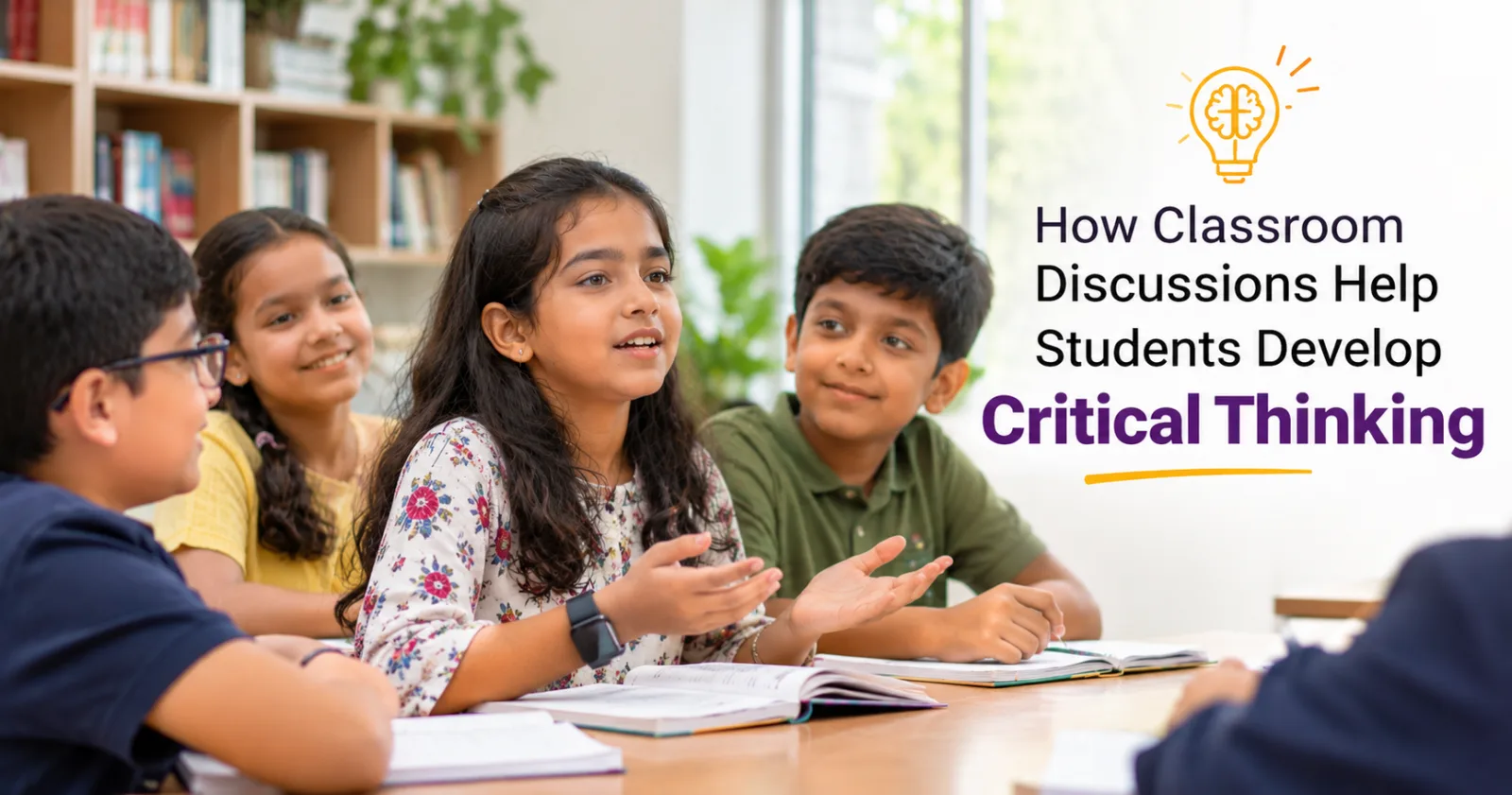
How Classroom Discussions Help Students Develop Critical Thinking
Explore how classroom discussions build reasoning, confidence and problem-solving skills at Candiidus International School, among Cambridge schools in Hyderabad.

How Cambridge Schools in Hyderabad Develop Confident Global Citizens
Discover how Cambridge Schools in Hyderabad develop confident global citizens through communication, cultural awareness, critical thinking, and collaborative learning.

How Cambridge Schools in Hyderabad Build Critical Thinkers and Independent Learners
Discover how Cambridge Schools in Hyderabad help students develop critical thinking, independence, problem-solving skills, and confidence for future success.
Discussion
Comments
No comments yet. Be the first to share your thoughts.
Leave a comment
Comments are reviewed before they appear on this page.